top of page
9EE0CBBA-DC76-4B2C-A8F2-FE69BBFA8954.jpg

Teaching & Learning Philosophy

Centering care, equity, and community in every learning space

My approach to education is rooted in the belief that learning is a collaborative and transformative process. I draw from liberatory and student-centered traditions, including bell hooks’ call to make education a practice of freedom and Paulo Freire’s insistence that learners are co-creators of knowledge. Blending pedagogy and andragogy, I design spaces that honor lived experiences, cultivate agency, and build community. Whether through curriculum design, workshops, or one-on-one coaching, my goal is to support learners in setting meaningful goals, engaging in critical reflection, and taking action that leads to lasting growth.

book.JPG
9EE0CBBA-DC76-4B2C-A8F2-FE69BBFA8954.jpg

My Approach to Teaching and Learning

Pedagogy and Andragogy

Learning is most powerful when it is collaborative and connected to real life. Drawing on Freire’s liberatory education, I view learners as co-creators of knowledge, not passive recipients. With adults, I use an andragogical approach shaped by adult learning theorists like Merriam, Bierema, and Caffarella, honoring lived experiences and ensuring that learning feels relevant, practical, and empowering.

Praxis

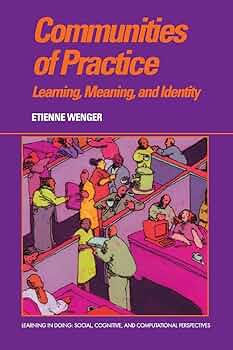
Education is not only about reflection, but also about action. My praxis echoes Freire’s notion of reflection and action (praxis) and Wenger’s idea of communities of practice, where learning happens through shared participation, mentoring, and belonging. These spaces help learners develop confidence, identity, and agency as they grow into fuller versions of themselves.

Critical Perspectives

Education does not exist in isolation. Systems of race, class, gender, sexuality, immigration status, and power shape who has access to opportunity and how learning is valued. My practice is informed by critical race theory (Wijeyesinghe, Jackson, and others), social justice frameworks (Darling-Hammond et al.), and equity-focused texts like Me and White Supremacy and The New Jim Crow. These works remind me to challenge inequities, uplift counter-stories, and design with equity at the center.


Leadership and Mentorship

I approach leadership as relational and collective. Rather than focusing on control or outcomes, I aim to inspire, motivate, and empower others. This reflects a commitment to leadership theories that prioritize collaboration, care, and justice. Mentorship is central to this process, creating spaces where learners and colleagues feel supported, valued, and ready to take risks in pursuit of their goals.

Experience in Action

  • Curriculum Design: Contextual, collaborative, and justice-oriented.

  • Workshops: Dialogue-driven, reflective, and participatory, so every voice is heard.

  • Advising and Coaching: Individualized support that helps learners set meaningful goals and follow through with confidence.

9EE0CBBA-DC76-4B2C-A8F2-FE69BBFA8954.jpg

Influential Works in My Practice

The following works have deeply informed my teaching and learning philosophy. They represent a range of perspectives, from liberatory theory to adult learning, from critical race scholarship to global and comparative studies, that continue to shape how I approach curriculum design, workshops, and coaching. These texts remind me that education is not just about knowledge, but about transformation, equity, and belonging.


Foundational Theory & Pedagogy

These works ground my understanding of liberatory, dialogical, and critical approaches to education.


Teaching to Transgress by bell hooks

  • hooks frames education as the practice of freedom. She urges us to break hierarchies and honor student voices.

  • Key takeaway: Teaching is most transformative when rooted in care, dialogue, and humanity.


Pedagogy of the Oppressed by Freire

  • Freire contrasts “banking education” with problem-posing education that sparks reflection and action.

  • Key takeaway: Education awakens consciousness and challenges systems of oppression.


Narratives of Progress and the Colonial Origins of Schooling by Hemphill and Blakely

  • Critiques the ways colonial narratives shape modern schooling and notions of “progress.”

  • Key takeaway: Education systems are built on colonial legacies, and justice requires disrupting those narratives.


Learning in a Marginalized Community of Practice by Wenger 

  • Wenger’s framework shows how identity and belonging shape learning in communities of practice.

  • Key takeaway: Marginalized communities generate powerful knowledge through shared practice.


Adult & Continuing Education

​These guides and frameworks shape my work with adult learners and higher education.


Planning Programs for Adult Learners by Daffron and Caffarella

  • A practical guide for designing effective adult learning programs.

  • Key takeaway: Program planning integrates learner goals, context, and equity.


Adult Learning: Linking Theory and Practice by Merriam and Bierema

  • Connects theory with application for adult learners.

  • Key takeaway: Adult learners bring rich experiences, and effective education honors multiple ways of knowing.


Adult and Continuing Education by Kasworm, Rose, and Ross-Gordon

  • Explores the breadth of adult and continuing education as a field.

  • Key takeaway: Adult education is diverse and evolving, requiring equity and adaptability.


Philanthropy, Volunteerism, and Fundraising in Higher Education by Gasman, Walton, Huchls, Wells, and Drezner

  • Examines the history, practice, and equity challenges of philanthropy and fundraising in higher education.

  • Key takeaway: Equity in higher education extends to how resources are raised and distributed.

Social Justice & Identity in Education

​These works highlight identity, equity, and justice as essential components of education.


Learning to Teach for Social Justice by Darling-Hammond, French, and García-Lopez

  • Focuses on preparing educators to teach for equity and inclusion.

  • Key takeaway: Teaching for social justice requires reflection, critique, and actionable strategies.

New Perspectives on Racial Identity Development by Wijeyesinghe and Jackson III

  • Explores racial identity development through multiple frameworks and perspectives.

  • Key takeaway: Racial identity is complex, intersectional, and central to educational justice and belonging.

Me and White Supremacy (Book & Workbook) by Saad

  • Guides readers through reflection and journaling to examine complicity in white supremacy and take action toward anti-racism.​

  • Key takeaway: Dismantling oppression requires sustained reflection and practice at both individual and community levels.​​

Social Justice, Policy & Equity in Education

These works examine how law, policy, leadership, and economics shape equity in education, highlighting both systemic barriers and pathways toward justice.

Understanding Affirmative Action: Politics, Discrimination and the Search for Justice by Kellough

  • Explores the history and politics of affirmative action, highlighting its role in addressing systemic inequities.

  • Key takeaway: Affirmative action is an essential tool for advancing equity and justice.

The Struggle for Equity by Imber

  • Analyzes historical and legal struggles for educational equity in U.S. schools. 

  • Key takeaway: Equity demands persistent critique of legal, policy, and structural barriers in education.

The Extent of Public Education Nondiscrimination Policy Protections for Lesbian, Gay, Bisexual, and Transgender Students: A National Study by Russo

  • Examines nondiscrimination protections across U.S. schools.

  • Key takeaway: Explicit protections for LGBTQ+ students are necessary to ensure safe and equitable learning environments.


What Educational Resources Do Students Need to Meet California's Educational Content Standards? by Koski and Weis

  • Analyzes California’s content standards and resource allocation.

  • Key takeaway: Standards only matter when paired with equitable access to resources and learning conditions.


Leadership in Schools by DeVita and Dowd

  • Discusses the challenges and opportunities of educational leadership.

  • Key takeaway: Strong leadership balances accountability with equity and community care.


Comparing Neo-Liberal Projects and Inequality in Education by Apple

  • Critiques how neoliberal policies shape education and deepen inequality.

  • Key takeaway: Market-driven reforms exacerbate inequities and weaken democratic education.


The Flexible University: Higher Education and the Global Production of Migrant Labor by Ortiga

  • Explores how higher education systems adapt to global labor markets and migration.

  • Key takeaway: Universities can reproduce global inequities by channeling students into precarious migrant labor.

Global & Comparative Perspectives

These works draw from global contexts, showing how culture, gender, and colonial legacies influence learning and educational systems worldwide.


Large Classes in China: ‘Good’ Teachers and Interaction by Cortazzi and Jin 

  • Examines pedagogy in large classrooms in China.

  • Key takeaway: Interaction in large classes reflects cultural and systemic expectations of learning.


Education for Women: Whose Values Count? (Nepal) by Robinson-Pant

  • Critiques international and local approaches to women’s education in Nepal.

  • Key takeaway: Women’s education must reflect local values and contexts, not just imposed global frameworks.


Popular Education, Work Training, and the Path to Women’s Empowerment in Chile by Bosch

  • Explores the intersection of popular education and women’s empowerment in Chile.

  • Key takeaway: Popular education empowers women by linking learning to work, rights, and self-determination.


Contesting the Curriculum in the Schooling of Indigenous Children in Australia and the United States: From Eurocentrism to Culturally Powerful Pedagogies by Hickling-Hudson and Ahlquist

  • Examines Indigenous schooling in settler-colonial contexts.

  • Key takeaway: Culturally sustaining pedagogies challenge Eurocentric curricula and affirm Indigenous knowledge.


Contemporary Works & Narratives of Justice

These narratives and contemporary analyses ground educational justice in lived experience, connecting systemic inequities to human stories of resilience and change.


The New Jim Crow by Alexander

  • Examines how mass incarceration functions as a system of racial control.

  • Key takeaway: Educational justice is inseparable from larger systems of racial injustice.

The Immortal Life of Henrietta Lacks by Skloot

  • Explores the legacy of Henrietta Lacks, whose cells were used without her consent, raising questions of race, ethics, and medical research.

  • Key takeaway: Justice requires consent, transparency, and respect for marginalized communities in all fields of knowledge.

The Body Is Not an Apology: The Power of Radical Self-Love by Taylor

  • Challenges body shame and systemic oppression through the practice of radical self-love.

  • Key takeaway: Liberation begins with reclaiming and honoring our bodies as sites of power and belonging.

Savage Inequalities: Children in America’s Schools by Kozol

  • Reveals deep disparities in educational opportunities across U.S. public schools.

  • Key takeaway: Equity in education demands systemic change to confront underfunding and segregation.

9EE0CBBA-DC76-4B2C-A8F2-FE69BBFA8954.jpg

Together, these works form the foundation of my approach to education, justice, and care. They remind me that learning is not just about knowledge, but about transformation, belonging, and the pursuit of equity.

96864A6A-5353-4920-A7F6-426701F2A07D.jpg
9EE0CBBA-DC76-4B2C-A8F2-FE69BBFA8954.jpg

Liberatory education begins with reflection and action (Freire, 1970).

bottom of page